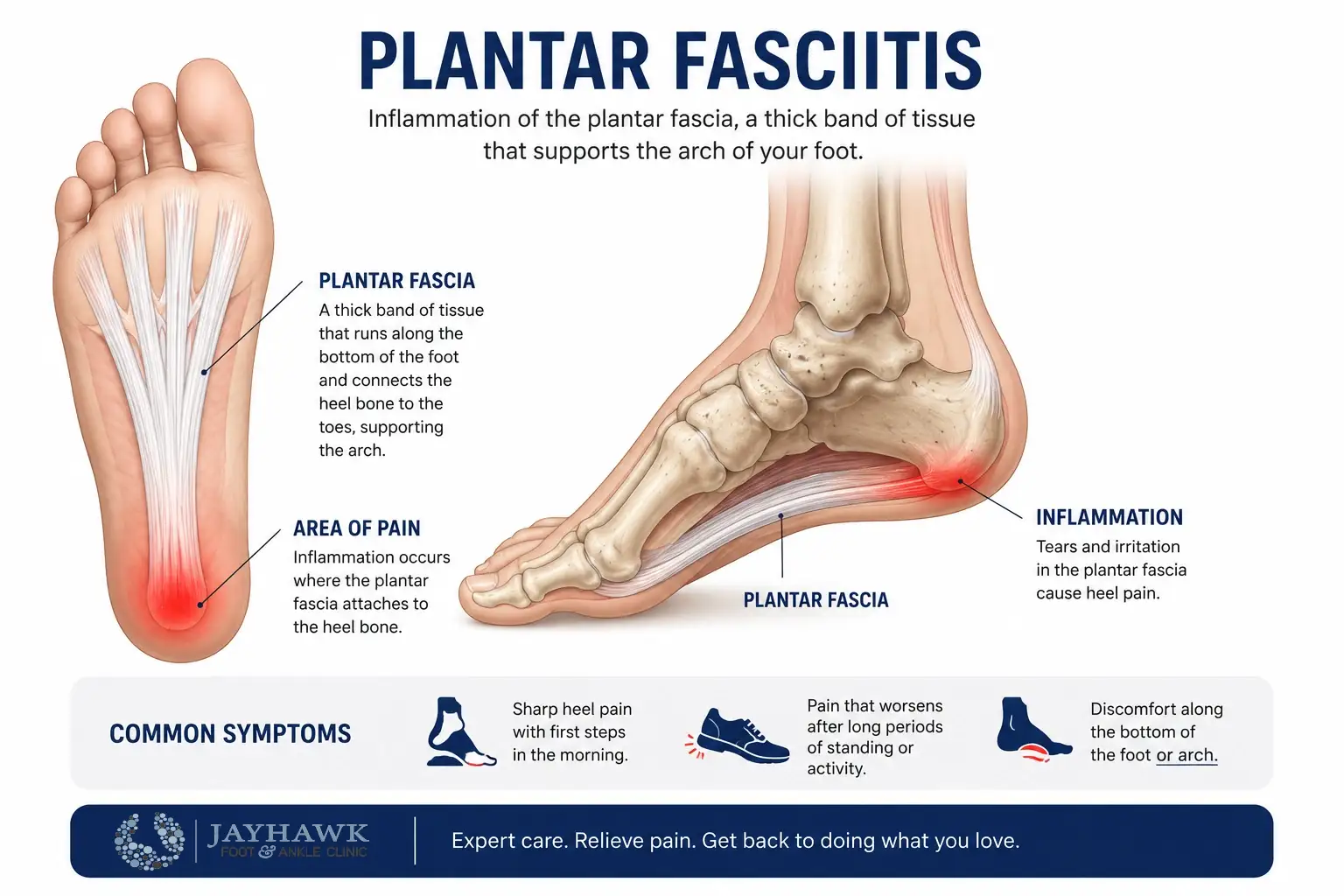
A complete patient guide to plantar fasciitis, morning heel pain, causes, diagnosis, treatment options, recovery, prevention, and when to schedule with a podiatrist.
🦶 Patient Guide To Plantar Fasciitis And Heel Pain
Patient Education Guide
Why Your Heel Hurts, What It Means, And What Can Help
Plantar fasciitis is one of the most common reasons people develop pain at the bottom of the heel. It can feel like a sharp stab, a deep bruise, a tight pull through the arch, or a painful jolt when your foot first hits the floor in the morning. This page explains the condition in plain language so patients can understand what may be happening and when professional evaluation makes sense.
🌅
Classic Pattern
Pain is often worst during the first steps after waking or after sitting for a while.
🦶
Common Location
Pain usually sits near the bottom of the heel and may spread into the arch.
🩺
When To Call
Persistent heel pain, swelling, limping, or pain that keeps returning should be evaluated.
Complete Condition Guide
Patient Guide To Plantar Fasciitis And Heel Pain
This guide covers what plantar fasciitis is, what symptoms feel like, what causes it, how podiatrists diagnose it, treatment options, home care, recovery expectations, and local care at Jayhawk Foot & Ankle Clinic.
Overview
Plantar fasciitis is a painful irritation of the plantar fascia, the strong band of tissue that runs along the bottom of the foot from the heel toward the toes. The plantar fascia helps support the arch and absorbs force when you stand, walk, run, climb stairs, or push off the ground.
When that tissue becomes overloaded, tight, inflamed, or irritated where it attaches near the heel, pain can develop. Many patients feel it as a sharp pain under the heel. Others describe it as soreness through the arch, a bruised feeling under the heel, burning discomfort, or tightness that eases once the foot warms up.
Plantar fasciitis is common, but that does not mean it should be ignored. The longer the heel stays irritated, the more the body may compensate. Patients may start walking differently, avoiding pressure, tightening the calf, overloading the opposite foot, or aggravating the ankle, knee, hip, or back.
What Is The Plantar Fascia?
The plantar fascia is a thick, fibrous band under the foot. It works like a tension cable for the arch. When the foot hits the ground, the plantar fascia helps control flattening of the arch. When you push off, it helps stabilize the foot so it can act as a lever.
Because it handles repeated force every day, the plantar fascia is sensitive to changes in activity, footwear, body weight, walking mechanics, calf tightness, arch height, work demands, and training surfaces. A small change in any one of those factors may not matter. Several changes stacked together can create enough stress to make the heel hurt.
Morning heel pain that keeps coming back? Schedule an appointment before limping, compensation, or delayed care turns it into a longer recovery.
Plantar fasciitis symptoms are not identical for every patient, but several patterns are common.
Sharp, stabbing, aching, or bruised-feeling pain at the bottom of the heel.
Pain with the first steps in the morning.
Pain after sitting, driving, or resting, especially when standing again.
Discomfort that may ease after a few minutes of walking, then return later.
Arch tightness or soreness along the bottom of the foot.
Heel pain after long periods of standing, walking, or exercise.
Pain that is worse barefoot on hard floors.
Tenderness when pressing near the bottom-inside part of the heel.
Limping, shortened stride, or avoiding heel pressure.
Some patients only hurt in the morning. Others feel pain throughout the day. A patient who works on concrete all day may feel worse by the end of a shift. A runner may feel pain after training or the next morning. A person who has recently changed shoes or increased activity may notice symptoms that seem to come out of nowhere.
Why Plantar Fasciitis Hurts So Bad In The Morning
Morning heel pain is one of the classic clues. While you sleep, the foot often rests in a slightly pointed position. The plantar fascia and calf may tighten overnight. When you get out of bed and put weight on the foot, that tight tissue suddenly has to stretch and load again.
That first stretch can pull on the irritated attachment near the heel and cause a sharp stab of pain. After several steps, the tissue may loosen enough for the pain to settle down. That does not mean the problem is gone. It usually means the tissue has warmed up temporarily.
The same pattern can happen after sitting at a desk, driving, watching TV, or resting after activity. The foot tightens during rest, then hurts when loaded again.
What Causes Plantar Fasciitis?
Plantar fasciitis usually develops from repeated strain on the plantar fascia. It is not always caused by one dramatic injury. More often, the tissue becomes irritated after weeks or months of repeated load, poor support, tightness, or mechanical stress.
Common contributors include:
Standing or walking for long periods, especially on hard surfaces.
Jobs that keep patients on their feet most of the day.
Running, jumping, court sports, or sudden increases in training.
Tight calf muscles or limited ankle flexibility.
Flat feet, high arches, or foot mechanics that overload the heel and arch.
Shoes with poor arch support, worn-out cushioning, or thin soles.
Walking barefoot on hard floors.
Recent weight gain or increased load on the feet.
Sudden activity changes, such as starting a new workout routine.
Changing footwear, work shoes, exercise surfaces, or daily walking demands.
The key idea is load. The plantar fascia can handle a lot, but it has limits. When the load is too much, too sudden, or poorly supported, the heel can become irritated.
Risk Factors
Anyone can develop plantar fasciitis, but certain factors make it more likely. Adults in midlife are commonly affected, but younger athletes and highly active workers can develop it too.
Age and tissue changes: The plantar fascia may become less tolerant of stress over time.
Activity level: Running, jumping, walking long distances, or sudden training changes can overload the fascia.
Occupation: Teachers, nurses, warehouse workers, retail workers, restaurant staff, tradespeople, and others who stand for long stretches are often vulnerable.
Foot structure: Flat feet, high arches, limited ankle motion, and abnormal pressure patterns can all contribute.
Footwear: Unsupportive shoes, worn-out shoes, flip-flops, and thin slippers can make symptoms worse.
Body load: Weight changes, pregnancy, or carrying heavy loads can increase stress on the heel.
Heel Pain Is Not Always Plantar Fasciitis
Plantar fasciitis is common, but not every case of heel pain is plantar fasciitis. That matters because different conditions need different treatment.
Other possible causes of heel or arch pain include:
Achilles tendonitis or pain at the back of the heel.
Stress fracture of the heel bone or nearby bones.
Nerve irritation, entrapment, burning, tingling, or numbness.
Fat pad irritation or thinning under the heel.
Arthritis or inflammatory joint problems.
Bursitis near the heel.
Heel trauma after a fall, twist, jump, or impact.
Skin lesions, warts, calluses, wounds, or infection.
Referred pain from another area.
If symptoms are unusual, severe, spreading, associated with numbness, linked to trauma, or not improving, a podiatric exam is important. The right diagnosis keeps patients from wasting weeks treating the wrong problem.
When To See A Podiatrist For Heel Pain
Not every sore heel requires urgent care, but persistent or worsening heel pain should not be brushed off. It is time to schedule an appointment when:
Heel pain lasts more than a couple of weeks despite rest, support, and shoe changes.
Pain is severe with the first steps in the morning.
You limp, avoid pressure, or change the way you walk.
Pain interferes with work, exercise, or normal daily activity.
There is swelling, bruising, redness, warmth, or increasing tenderness.
You cannot comfortably bear weight.
You have diabetes, neuropathy, circulation problems, or immune concerns.
The pain started after a fall, jump, twist, or direct injury.
Home care helps temporarily, but the pain keeps coming back.
Early evaluation often makes treatment simpler. A podiatrist can confirm whether the plantar fascia is the source of pain, identify mechanical factors, and recommend a plan that fits the patient’s foot, lifestyle, work demands, and activity goals.
How Plantar Fasciitis Is Diagnosed
A diagnosis usually starts with a detailed history and physical exam. The podiatrist may ask when the pain started, where it hurts, what makes it better or worse, what shoes you wear, what kind of work you do, whether your activity recently changed, and whether you have had previous foot or ankle problems.
During the exam, the physician may check:
The exact location of heel tenderness.
Arch shape and foot alignment.
Ankle motion and calf tightness.
Gait and pressure patterns.
Strength, stability, and range of motion.
Nerve symptoms such as burning, tingling, or numbness.
Signs of swelling, bruising, trauma, skin issues, or infection.
Plantar fasciitis can often be diagnosed clinically, but imaging may be used when symptoms are atypical, severe, persistent, related to injury, or not responding as expected.
Imaging And Tests
Many patients do not need advanced imaging right away. When the story and exam match classic plantar fasciitis, treatment can often begin without complicated testing.
Imaging may be considered when the diagnosis is unclear, pain is severe, symptoms do not improve, or another problem needs to be ruled out. Depending on the situation, evaluation may include X-rays to look at bone structure or rule out fracture, ultrasound to evaluate soft tissue, or MRI when a deeper injury or alternative diagnosis is suspected.
A heel spur may appear on an X-ray, but a heel spur does not automatically mean it is the cause of pain. Many people have heel spurs without symptoms. The treatment decision should be based on the full exam, not the X-ray alone.
Ready to stop guessing? Book an appointment and get a clear treatment plan for plantar fasciitis, heel pain, arch tightness, or pain that changes how you walk.
Most plantar fasciitis treatment starts conservatively. The goal is to reduce pain, calm irritation, support the arch, improve flexibility, reduce excess load, and prevent the problem from returning.
Treatment may include:
Activity modification: Reducing or adjusting the activities that aggravate heel pain while symptoms calm down.
Ice: Short periods of icing can help reduce pain after activity.
Stretching: Calf and plantar fascia stretching can reduce tension through the heel and arch.
Supportive shoes: Proper footwear can reduce strain on the plantar fascia.
Arch supports or orthotics: Inserts can help control foot mechanics and unload the irritated tissue.
Padding or strapping: Taping and support may reduce strain during walking or work.
Anti-inflammatory medication: Over-the-counter medication may be appropriate for some patients, depending on health history and physician guidance.
Night splints: A night splint may help keep the plantar fascia and calf from tightening overnight.
Physical therapy: Therapy may focus on flexibility, strengthening, gait, and mechanics.
Injections or advanced options: When symptoms persist, additional treatments may be discussed based on the patient’s exam.
The best treatment plan depends on the patient. A runner, a nurse working twelve-hour shifts, a retiree with morning heel pain, and a patient with flatfoot mechanics may all need different plans.
What You Can Try At Home Before Your Appointment
Simple changes may help reduce irritation while you are waiting to be seen. These steps are not a substitute for diagnosis, but they can help many patients avoid making the pain worse.
Wear supportive shoes as soon as you get out of bed.
Avoid walking barefoot on hard floors.
Limit running, jumping, or high-impact activity while symptoms are flared.
Use ice after activity if the heel is painful.
Stretch the calf gently rather than aggressively forcing the foot.
Consider a supportive over-the-counter arch support if shoes feel flat or unsupportive.
Replace worn-out shoes, especially work shoes or running shoes.
Pay attention to which activities trigger the pain and write them down before your visit.
If pain is severe, traumatic, associated with swelling or bruising, or you cannot bear weight, do not wait on home care alone. Schedule an evaluation.
What Not To Do
Some habits can keep plantar fasciitis irritated or make heel pain worse.
Do not keep pushing through sharp heel pain and hope it disappears.
Do not walk barefoot on hard floors if it triggers symptoms.
Do not assume every heel pain problem is plantar fasciitis.
Do not keep wearing shoes that are worn out, flat, or painful.
Do not stretch so aggressively that pain spikes afterward.
Do not ignore numbness, tingling, burning, bruising, redness, drainage, or inability to bear weight.
The goal is not to stop all activity forever. The goal is to stop feeding the irritation while the right treatment plan is built.
Recovery Timeline
Recovery depends on how long symptoms have been present, how irritated the tissue is, the patient’s activity level, work demands, foot mechanics, footwear, and consistency with treatment.
Some patients improve within weeks after support, stretching, shoe changes, and load management. Others need several months, especially if pain has been present for a long time or if standing work keeps stressing the heel every day.
A common mistake is stopping treatment as soon as pain starts improving. Plantar fasciitis often needs continued support and flexibility work after pain decreases. Otherwise, symptoms can return when activity increases again.
Preventing Plantar Fasciitis From Coming Back
Prevention usually comes down to reducing repeated overload on the heel and arch. Helpful habits may include:
Wearing supportive shoes for work, exercise, and daily activity.
Replacing worn-out shoes before support breaks down.
Stretching calves and feet regularly, especially if tightness is a trigger.
Increasing running, walking, or workout volume gradually.
Using orthotics or arch support when recommended.
Avoiding long barefoot periods on hard floors.
Addressing flatfoot, high-arch, or gait mechanics when they contribute to pain.
Patients who stand all day may also benefit from rotating shoes, using anti-fatigue mats where appropriate, and scheduling breaks before pain becomes severe.
Plantar Fasciitis Treatment In Lenexa, Overland Park, Olathe, Shawnee, Leawood, And Kansas City
Jayhawk Foot & Ankle Clinic treats patients with plantar fasciitis and heel pain in Lenexa, Overland Park, Olathe, Shawnee, Leawood, Kansas City, and surrounding Johnson County communities.
Patients choose Jayhawk Foot & Ankle Clinic for focused podiatric evaluation, practical treatment planning, and care from physicians who treat foot and ankle problems every day. If heel pain is affecting your mornings, your workday, your workouts, or your ability to walk comfortably, it is worth getting a clear diagnosis.
These answers are general patient education. A podiatric exam is the best way to confirm what is causing your heel pain.
What does plantar fasciitis feel like?
It often feels like sharp, stabbing, aching, or bruised pain at the bottom of the heel. Many patients notice it most with the first steps in the morning or after sitting for a while.
Why does my heel hurt when I first get out of bed?
The plantar fascia and calf can tighten while you sleep. When you stand, the tight tissue suddenly stretches and loads, which can create sharp heel pain during the first steps.
Is plantar fasciitis the same as a heel spur?
No. A heel spur is a bony finding that may show on X-ray. Plantar fasciitis is irritation of the plantar fascia. Some people have heel spurs without pain, so treatment should focus on the full exam and symptoms.
Can plantar fasciitis go away on its own?
Some mild cases improve with support, stretching, shoe changes, and activity modification. Persistent, severe, or recurring pain should be evaluated so the underlying cause is not missed.
Should I keep running or exercising with plantar fasciitis?
If activity sharply increases pain or causes limping, continuing at the same level can keep the tissue irritated. A podiatrist can help decide what activity changes are appropriate while symptoms improve.
What shoes are best for plantar fasciitis?
Many patients do better with supportive shoes that provide cushioning, arch support, and stability. The best choice depends on foot structure, work demands, activity level, and gait mechanics.
Do orthotics help plantar fasciitis?
Orthotics or arch supports may help reduce strain on the plantar fascia by improving support and pressure distribution. Some patients do well with over-the-counter inserts, while others may need custom orthotics.
When should I schedule an appointment?
Schedule an appointment if heel pain lasts more than a couple of weeks, affects walking, causes limping, returns repeatedly, follows an injury, or is associated with swelling, bruising, redness, numbness, or trouble bearing weight.
Insurance Accepted
Ready To Get Heel Pain Checked?
Jayhawk Foot & Ankle Clinic evaluates plantar fasciitis, morning heel pain, arch pain, heel spurs, tight calf mechanics, recurring heel pain, and walking pain for patients in Lenexa, Overland Park, Olathe, Shawnee, Leawood, Kansas City, and surrounding communities.