A complete patient guide to toenail fungus, thick yellow nails, nail discoloration, causes, diagnosis, treatment options, prevention, recurrence, and when to schedule with a podiatrist.
🦶 Patient Guide To Toenail Fungus And Fungal Nails
Patient Education Guide
Why Your Toenail Is Thick, Discolored, Or Crumbling
Toenail fungus is a common nail infection that can make the nail look yellow, white, brown, thick, brittle, ragged, crumbly, or separated from the nail bed. It often develops slowly, may not hurt at first, and can be easy to ignore until the nail becomes difficult to trim, painful in shoes, or embarrassing to show.
🟨
Common Signs
Yellow, white, brown, thick, brittle, crumbly, misshapen, or lifting toenails may point to fungus.
🚿
Common Sources
Fungus thrives in warm, damp places like sweaty shoes, locker rooms, showers, and pool areas.
🩺
When To Call
Diabetes, poor circulation, pain, drainage, spreading redness, or worsening nail changes need podiatric care.
Complete Condition Guide
Patient Guide To Toenail Fungus And Fungal Nails
This guide covers what toenail fungus is, what symptoms look like, what causes it, how podiatrists diagnose it, treatment options, recurrence, prevention, and local care at Jayhawk Foot & Ankle Clinic.
Overview
Toenail fungus, also called onychomycosis, is a fungal infection involving the toenail. It can start as a small white or yellow-brown spot near the tip or edge of the nail. As the infection moves deeper, the nail may become thicker, darker, crumbly, ragged, misshapen, or separated from the nail bed.
Toenail fungus is common, especially with age, sweaty feet, athlete’s foot, nail injury, tight shoes, public shower exposure, diabetes, circulation problems, psoriasis, or a weakened immune system. It can affect one nail or several nails, and it often returns if the source of moisture, shoe contamination, or skin fungus is not addressed.
Many cases are not painful at first. That does not mean they should be ignored. Thick fungal nails can become hard to trim, press into shoes, cause walking discomfort, spread to nearby nails or skin, and create higher risk problems for patients with diabetes, poor circulation, or reduced sensation.
What Is Toenail Fungus?
Toenail fungus happens when fungal organisms get into or under the nail and begin growing in the nail tissue or nail bed. The most common cause is a group of fungi called dermatophytes, but yeasts, molds, and even mixed infections can also be involved.
Fungi feed on keratin, the protein that makes nails hard. Once fungus gets into a damaged, lifted, cracked, or thickened nail, it can be difficult to clear because the nail grows slowly and the infection may sit underneath the nail plate.
The medical terms can vary. Onychomycosis is the general term for fungal nail infection. Tinea unguium is often used when dermatophyte fungi are the cause.
Thick, yellow, brittle, or lifting toenails? Schedule an appointment before nail fungus becomes harder to trim, treat, or keep from spreading.
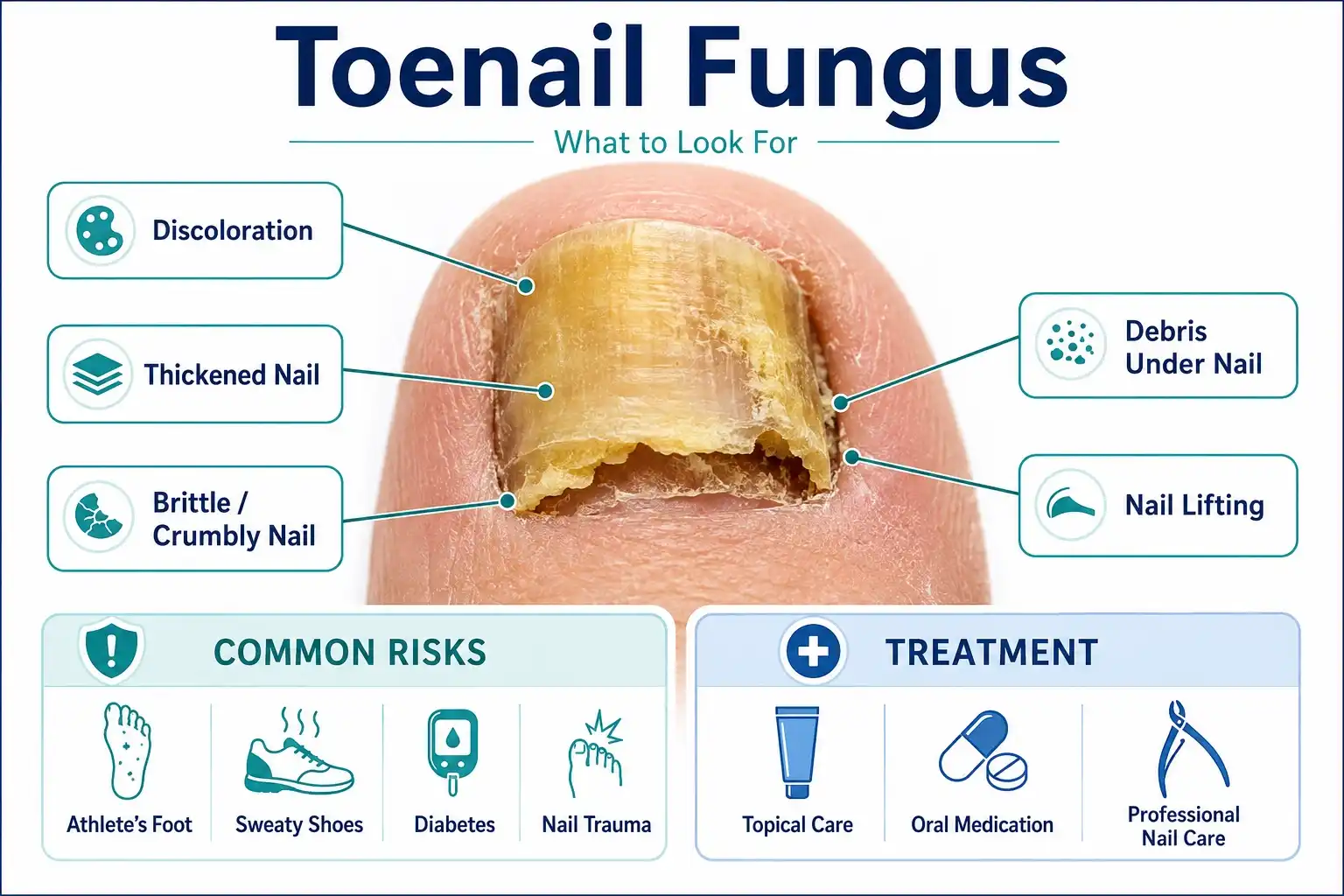
Toenail fungus can change the nail’s color, shape, texture, thickness, and attachment to the nail bed. Symptoms may include:
Yellow, white, brown, gray, or cloudy nail discoloration.
White spots, streaks, or chalky patches on the nail.
Thickened toenails that are hard to trim.
Brittle, crumbly, ragged, or splitting nail edges.
Misshapen or distorted nail growth.
Nail lifting or separating from the nail bed.
Debris collecting under the nail.
Foul odor from the nail or trapped debris.
Pain or pressure in shoes when the nail becomes thick.
Difficulty walking if the nail becomes painful or presses into footwear.
Fungal nails are often ignored because they may not hurt for months or years. By the time the nail is thick, crumbly, or lifted, treatment usually takes patience and a consistent plan.
What Causes Toenail Fungus?
Toenail fungus develops when fungi reach the nail through small cracks, trauma, separation, or softened skin around the nail. The organisms grow best in warm, dark, moist environments.
Common causes and contributors include:
Walking barefoot in locker rooms, public showers, gyms, or pool areas.
Sweaty feet or shoes that trap moisture.
Old shoes that may hold fungal organisms.
A history of athlete’s foot.
Nail trauma from stubbing the toe, tight shoes, sports, or repeated pressure.
Minor cuts or cracks near the nail.
Thickened or damaged nails that trap debris.
Shared or unclean nail tools.
Pedicures where tools or foot baths are not properly sanitized.
Diabetes, circulation problems, psoriasis, or immune system problems.
Athlete’s foot and toenail fungus can feed each other. Fungus on the skin can spread into the nail, and fungus in the nail can keep re-seeding the skin between the toes.
Who Is More Likely To Get Toenail Fungus?
Anyone can develop toenail fungus, but risk increases when the nail is exposed to repeated moisture, pressure, injury, or reduced immune defense.
Older adults.
People with sweaty feet or hyperhidrosis.
People who wear tight, closed, or non-breathable shoes.
Athletes and people who use public locker rooms or showers.
People with athlete’s foot.
People with nail trauma or repeated shoe pressure.
People with diabetes.
People with poor circulation or peripheral vascular disease.
People with psoriasis or other nail-affecting skin conditions.
People with weakened immune systems.
Is Toenail Fungus Contagious?
Toenail fungus can spread. It may spread from one nail to another, from the nail to the skin between the toes, or from contaminated surfaces to the foot. It can also spread through shared nail clippers, files, shoes, socks, towels, or damp public areas.
That does not mean every discolored nail is contagious fungus. Nails can change because of trauma, psoriasis, aging, circulation problems, medication effects, bacterial infection, or other nail disease. That is one reason testing may matter before committing to months of treatment.
How Toenail Fungus Is Diagnosed
A podiatrist will examine the nail, surrounding skin, nail thickness, discoloration pattern, shoe pressure, and signs of athlete’s foot or secondary infection. In some cases, the appearance strongly suggests fungus, but testing can help confirm the diagnosis.
Testing may include trimming or scraping a small sample from the nail or debris under the nail. The sample can be examined under a microscope, sent for fungal culture, or otherwise analyzed to determine whether fungus is present and what type may be involved.
This is important because not every thick or yellow nail is fungal. Confirming the cause helps avoid wasting time on the wrong treatment.
Can Toenail Fungus Be Treated At Home?
Home care may help reduce moisture, lower recurrence risk, and temporarily suppress mild surface changes. It usually does not reliably clear deeper fungal nail infections by itself.
Helpful steps may include:
Keeping feet clean and dry.
Changing socks when damp.
Using breathable shoes.
Rotating shoes so they dry fully.
Using antifungal powder or spray when recommended.
Treating athlete’s foot promptly.
Cleaning and disinfecting nail tools.
Trimming nails straight across and avoiding nail trauma.
Over-the-counter antifungal products may help some mild infections or surface changes, but thick infected nails often need professional trimming, diagnosis, and a more targeted plan.
Ready to stop guessing? Book an appointment and get a clear treatment plan for thick fungal nails, discoloration, nail lifting, recurrence, or shoe pressure.
Treatment depends on how many nails are involved, how thick the nail is, whether the infection is confirmed, the patient’s health history, medication risks, and how much the nail bothers the patient.
Debridement And Nail Trimming
Thick fungal nails may be trimmed and thinned in the office. This can reduce pressure in shoes, make the nail easier to manage, remove loose diseased nail material, and help topical medication reach the nail more effectively.
Topical Antifungal Medication
Prescription or over-the-counter topical medication may be applied to the nail over time. Topicals are often used for mild to moderate cases, patients who cannot take oral medication, or as part of a combination plan.
Oral Antifungal Medication
Oral antifungal medication may be considered when the infection is more extensive or when topical treatment is unlikely to be enough. These medications can be more effective, but they are not right for every patient and may require review of medical history, medication interactions, and possible lab monitoring.
Combination Treatment
Some patients do best with a combination of professional nail debridement, topical medication, oral medication when appropriate, shoe hygiene, and treatment of athlete’s foot.
Laser Or Device-Based Treatment
Some providers offer laser or light-based treatments. These may temporarily improve nail appearance for some patients, but they are not usually the first-line answer for every case and should be discussed honestly before relying on them.
Why Treatment Takes So Long
Toenails grow slowly. Even when the fungus is improving, the damaged part of the nail has to grow out. A clearer nail may take months to become noticeable, and a full toenail can take much longer to replace itself.
That is why treatment requires consistency. Stopping too early, continuing to wear contaminated shoes, ignoring athlete’s foot, or letting the nail stay thick and damaged can make recurrence more likely.
When Toenail Fungus Needs Prompt Attention
Schedule an appointment if you notice:
Increasing nail thickness or deformity.
Pain or pressure in shoes.
Bleeding, drainage, pus, or odor.
Redness, warmth, or swelling around the nail.
Nail lifting or catching on socks.
Difficulty trimming the nail safely.
Trouble walking because of nail pressure.
Diabetes, poor circulation, nerve damage, or immune problems.
For patients with diabetes or poor circulation, nail problems deserve extra caution. A thick or infected nail can create pressure, skin breakdown, wounds, or secondary infection if ignored.
Preventing Toenail Fungus And Recurrence
There is no guaranteed way to prevent toenail fungus, but good foot hygiene and moisture control can lower risk.
Keep feet clean and dry.
Dry between the toes after bathing.
Wear clean, moisture-wicking socks.
Change socks during the day if they become damp.
Choose breathable shoes with enough toe room.
Rotate shoes and let them dry between wears.
Use antifungal powder or spray if recommended.
Wear sandals or shower shoes in public showers, locker rooms, gyms, and pool areas.
Disinfect nail clippers and files.
Avoid sharing nail tools, shoes, or socks.
Avoid nail polish or artificial nails when they trap moisture or interfere with treatment.
Treat athlete’s foot early so it does not keep spreading to the nails.
Toenail Fungus Care In Lenexa And The Kansas City Area
Jayhawk Foot & Ankle Clinic evaluates thick, discolored, painful, brittle, lifting, or difficult-to-trim toenails. Care may include diagnosis, nail trimming and thinning, fungal testing when appropriate, medication options, diabetic foot precautions, and prevention guidance to reduce recurrence.
If your toenails are thick, yellow, crumbly, painful in shoes, or getting worse, schedule an appointment before the nail becomes harder to manage.
Toenail fungus may make the nail yellow, white, brown, thick, brittle, crumbly, ragged, misshapen, smelly, or separated from the nail bed.
Is toenail fungus contagious?
Yes. Toenail fungus can spread through direct contact, shared nail tools, contaminated shoes or socks, and warm damp public surfaces like locker rooms, showers, gyms, and pool areas.
Can toenail fungus go away on its own?
True fungal nail infections often persist or worsen slowly. Mild cases may not bother some patients, but thickening, discoloration, pain, or spreading changes should be evaluated.
Why does toenail fungus take so long to treat?
Toenails grow slowly. Even when treatment is working, the damaged nail has to grow out. Clear improvement may take months, and recurrence is common if moisture, shoe contamination, or athlete’s foot are not addressed.
Do over-the-counter treatments work?
Over-the-counter antifungal products may help some mild or surface-level cases, but thick or deeper fungal nail infections often need professional diagnosis, nail debridement, prescription medication, or a combination plan.
Can I wear nail polish with toenail fungus?
Nail polish can trap moisture and may interfere with topical treatment. If you are treating a fungal nail, ask your podiatrist whether polish or artificial nails should be avoided.
Is toenail fungus dangerous if I have diabetes?
It can become more serious. Diabetes, poor circulation, or nerve damage can increase the risk of pressure sores, wounds, and secondary infection. Patients with diabetes should have nail changes evaluated promptly.
When should I schedule an appointment?
Schedule an appointment if the nail is thickened, painful, worsening, difficult to trim, draining, causing shoe pressure, or if you have diabetes, poor circulation, nerve damage, or a weakened immune system.
Insurance Accepted
Ready To Get Thick Or Discolored Toenails Checked?
Jayhawk Foot & Ankle Clinic evaluates toenail fungus, thick nails, yellow or crumbly nails, painful shoe pressure, recurring fungal nail problems, athlete's foot overlap, and diabetic nail concerns for patients in Lenexa, Overland Park, Olathe, Shawnee, Leawood, Kansas City, and surrounding communities.