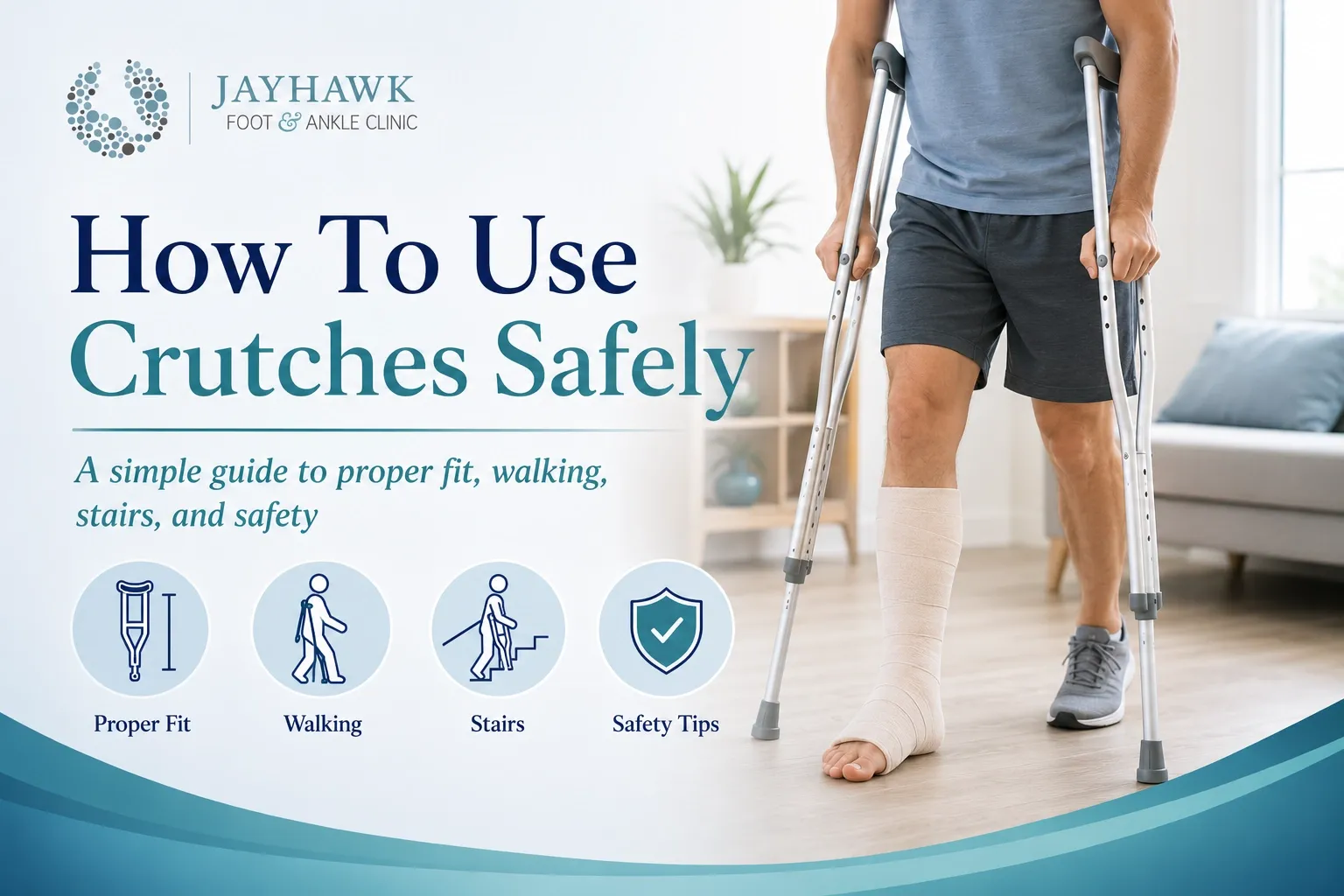
Crutches can protect an injured foot or ankle, reduce pressure while you heal, and help you stay mobile after a sprain, fracture, surgery, or painful flare-up. But crutches only help if they fit correctly and you use them safely.
This guide walks through the basics: how crutches should fit, how to stand up, how to walk, how to sit down, how to use stairs, and what mistakes to avoid. Always follow the specific weight-bearing instructions given by your doctor, surgeon, physical therapist, or podiatric team.
Before You Start: Make Sure Your Crutches Fit
Poorly fitted crutches can make walking harder and increase your risk of falls, shoulder strain, wrist pain, or nerve irritation. The top pads should sit below your armpits, not jammed directly into them. Your hands should carry your weight through the handgrips.

Basic crutch fit checklist
- The crutch tops should rest below your armpits, not pressed into them.
- Your elbows should have a slight bend when your hands are on the grips.
- Your weight should go through your hands, not your armpits.
- The rubber tips should be clean, secure, and not worn smooth.
- Wear supportive shoes with good traction whenever possible.
Set Up Your Space Before Walking
Crutches are much easier to use in a clear, well-lit space. Before moving around, remove throw rugs, cords, clutter, wet spots, and anything else that could catch a crutch tip. Keep commonly used items within reach so you are not tempted to carry objects while using both crutches.
- Use a backpack, waist pack, or cross-body bag instead of carrying items in your hands.
- Keep floors dry and clear.
- Move slowly when turning.
- Avoid slick shoes, loose sandals, and uneven outdoor surfaces when possible.
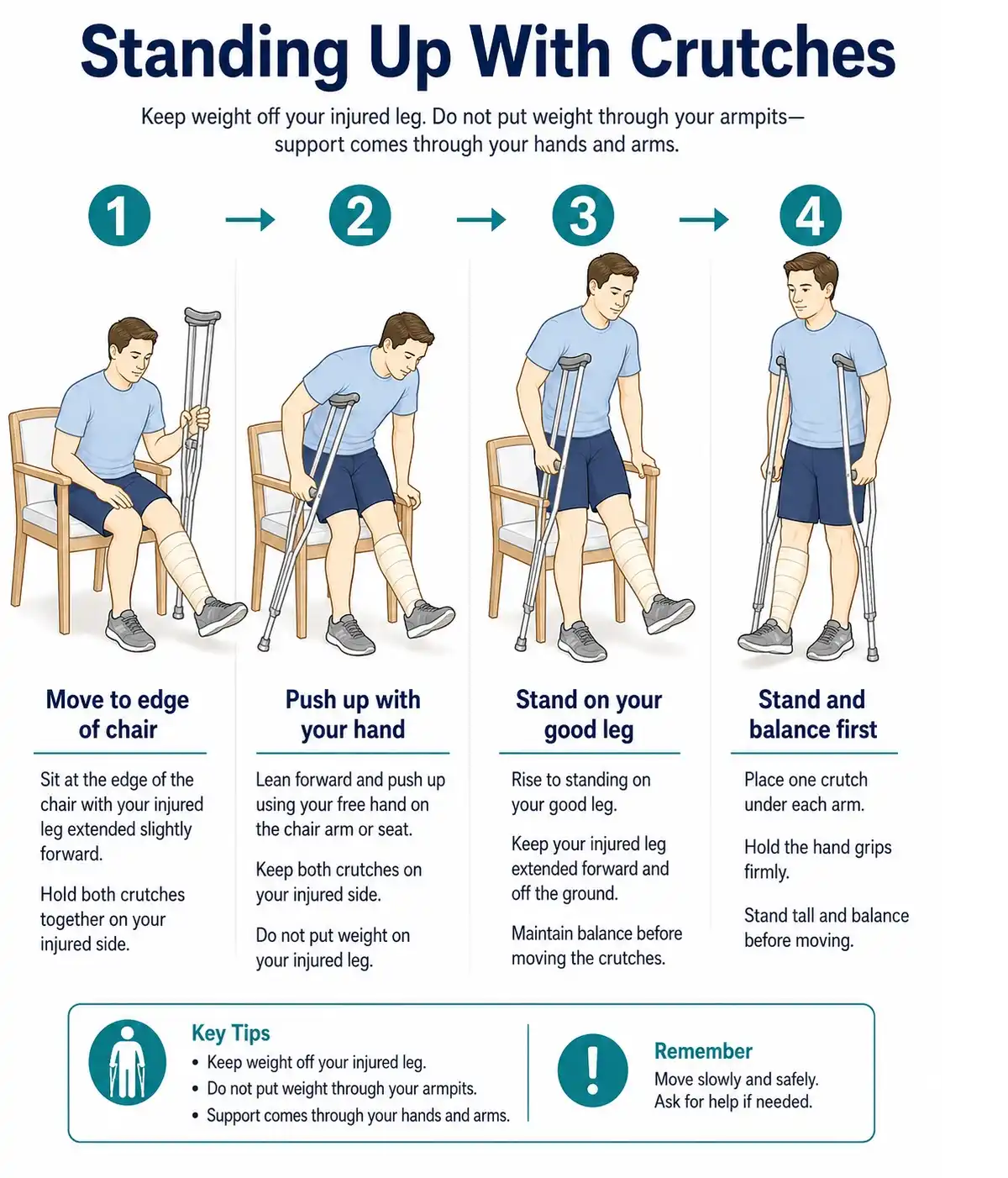
How To Stand Up With Crutches
Standing up is one of the easiest moments to lose balance because your weight shifts quickly. Start from a stable chair with armrests if possible.
- Move to the front edge of the chair.
- Place both crutches together on the injured side.
- Hold the handgrips of both crutches with the hand on the injured side.
- Use your other hand to push from the chair or armrest.
- Stand up on your stronger leg, then place one crutch under each arm once you are balanced.
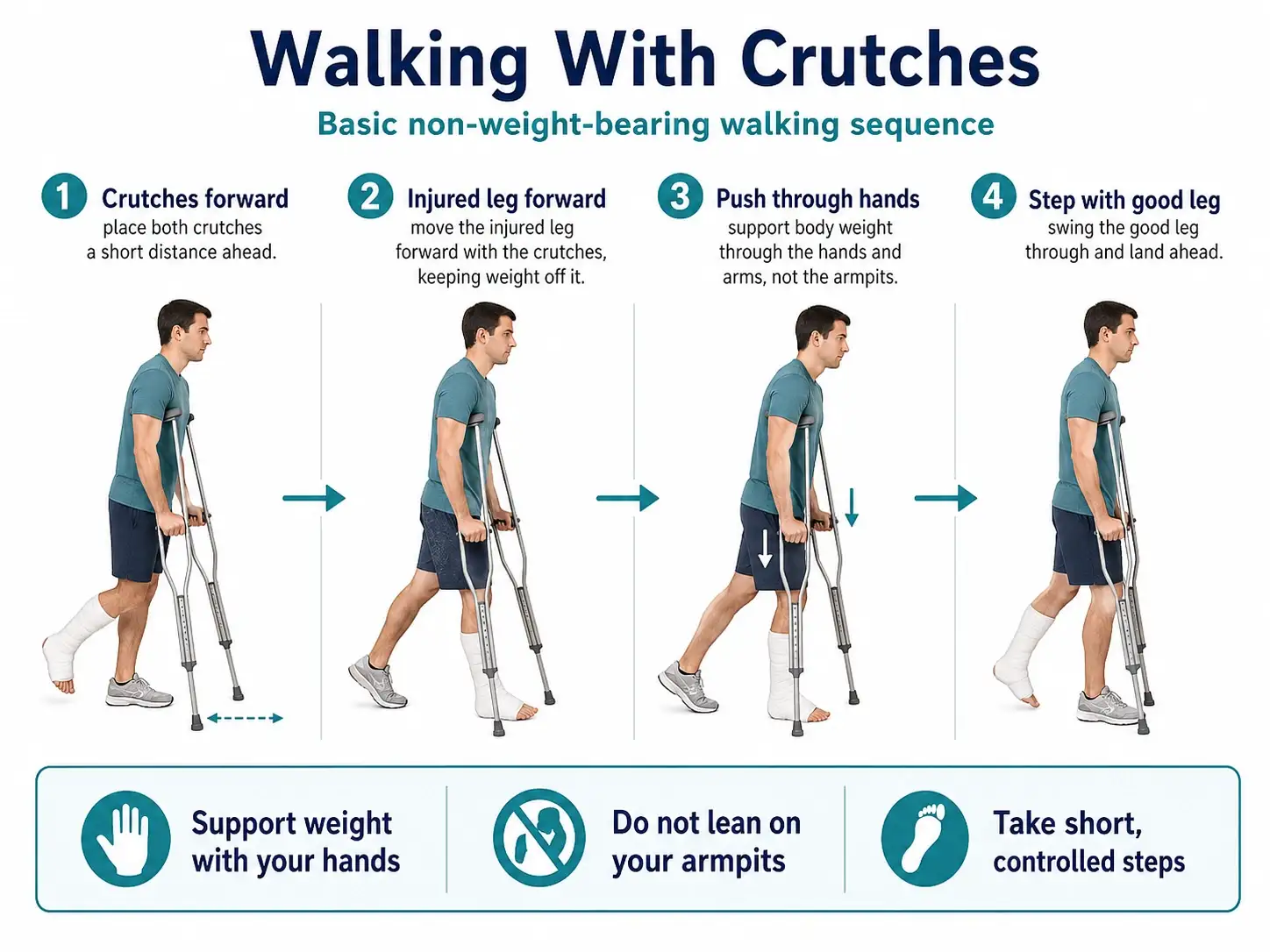
How To Walk With Crutches
Your exact walking pattern depends on whether you are non-weight-bearing, partial weight-bearing, or weight-bearing as tolerated. When in doubt, use the instructions your doctor gave you, not a generic online guide.
If you are non-weight-bearing
- Keep the injured foot or ankle off the ground.
- Place both crutches a short distance in front of you.
- Push down through your hands, not your armpits.
- Step or gently swing your stronger leg forward between the crutches.
- Land on the stronger leg and regain balance before the next step.
If you are partial weight-bearing
- Move both crutches forward first.
- Move the injured foot forward with the crutches.
- Put only the allowed amount of weight through the injured side.
- Step forward with the stronger leg.
- Keep the steps small and controlled.
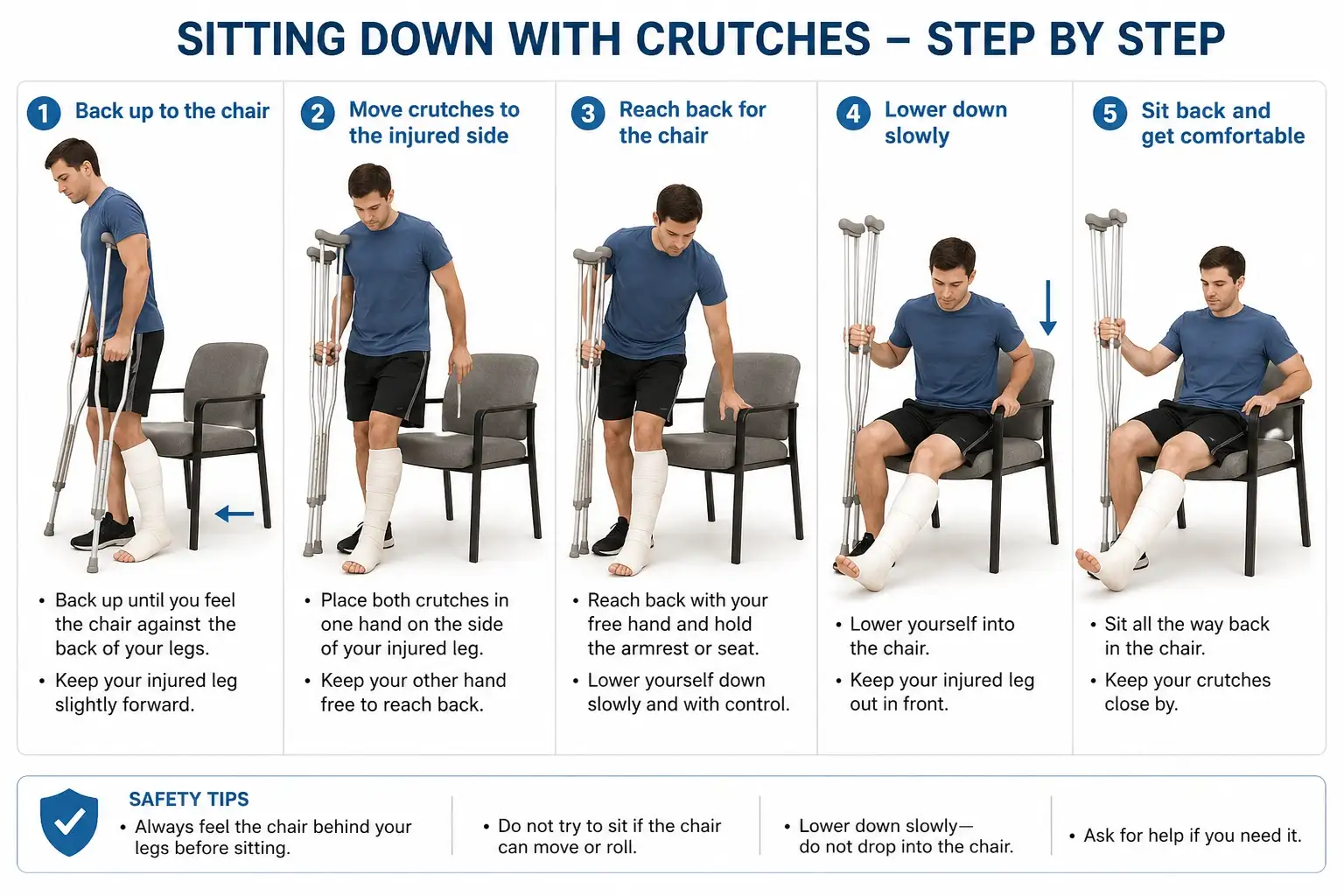
How To Sit Down With Crutches
Sitting down safely is the reverse of standing up. Move slowly and make sure you feel the chair behind your legs before lowering yourself.
- Back up until you feel the chair against the back of your legs.
- Move both crutches to the injured side.
- Hold both handgrips with the hand on the injured side.
- Reach back for the chair or armrest with your other hand.
- Lower yourself slowly and keep the injured leg protected as instructed.
How To Use Crutches On Stairs
Stairs require extra caution. Use a handrail whenever one is available. If stairs feel unsafe, ask for help or avoid them until you have practiced with a clinician.
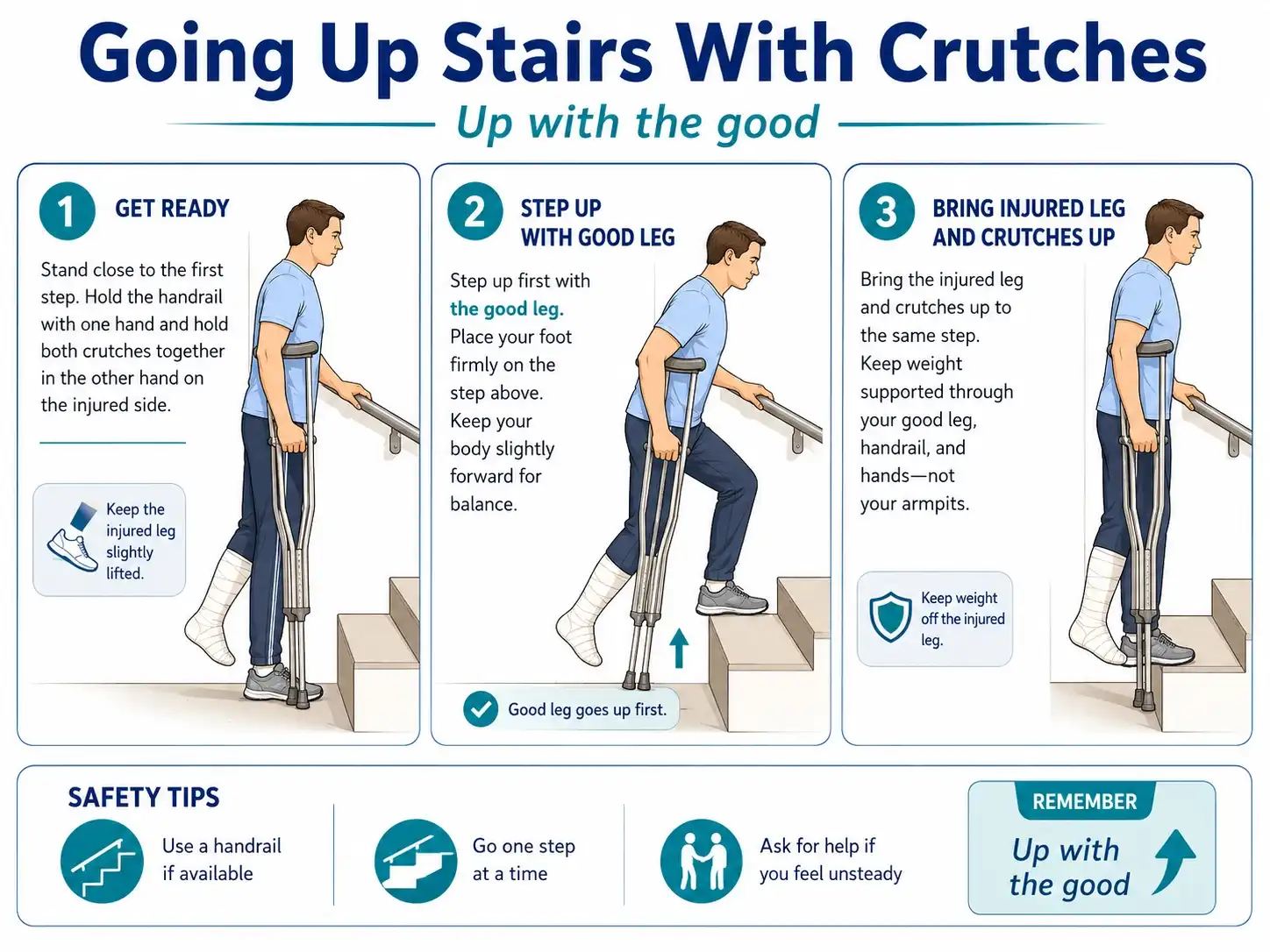
Going up stairs
- Hold the handrail with one hand if available.
- Hold both crutches in the other hand or use one crutch with the rail.
- Step up first with your stronger leg.
- Bring the injured leg and crutches up to the same step.
- Repeat one step at a time.
Going down stairs
- Stand close to the edge of the step without leaning forward.
- Move the crutch or crutches down to the next step first.
- Move the injured leg down with the crutches.
- Step down with the stronger leg.
- Pause and regain balance before repeating.
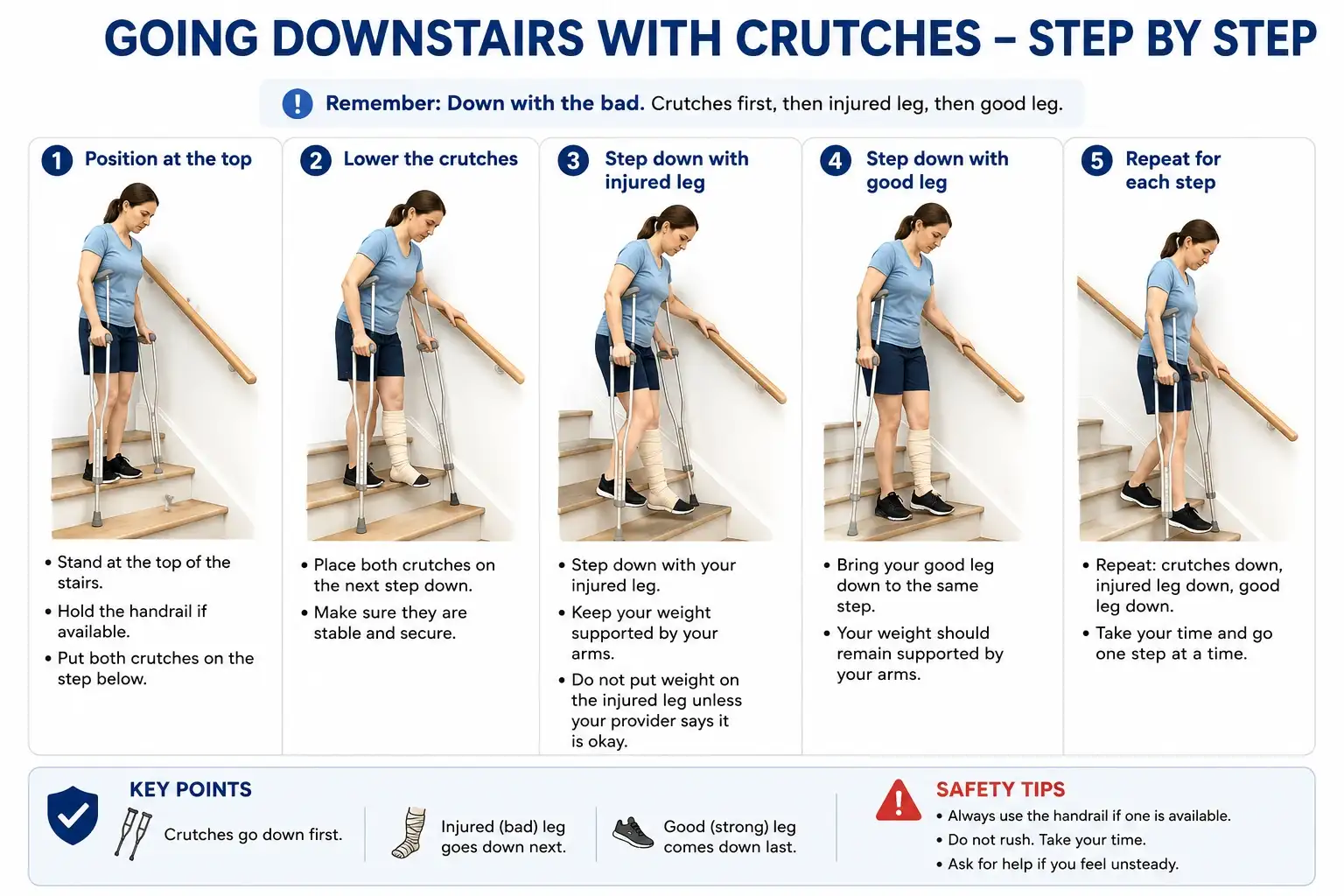
A simple phrase many patients remember is: up with the good, down with the bad. Your stronger leg leads going up. Your injured side and crutches lead going down.
Common Crutch Mistakes To Avoid
- Leaning into the armpit pads: This can irritate nerves and cause arm or hand symptoms.
- Taking steps that are too large: Short, controlled steps are safer.
- Letting crutch tips land too far away: Keep them close enough that you can stay balanced.
- Walking on wet or cluttered floors: Crutch tips can slip or catch.
- Ignoring weight-bearing restrictions: Too much weight too soon can slow healing or worsen an injury.
- Using worn rubber tips: Replace damaged tips before they become a fall risk.

When To Call A Doctor
Call your doctor, surgeon, or podiatrist if you are unsure how much weight you can put on your foot or ankle, if crutches feel unsafe, or if your pain, swelling, numbness, or balance problems are getting worse.
You should also call if your hands or arms become numb or weak, if the injured foot changes color or temperature, if you develop calf pain or swelling, or if you cannot safely move around your home.
Jayhawk Foot & Ankle Can Help You Recover Safely
Crutches are only one part of recovery. The bigger goal is protecting the injury, healing correctly, and returning to normal walking without creating new problems along the way.
If you are recovering from a foot or ankle injury, surgery, fracture, or painful condition, Jayhawk Foot & Ankle Clinic can help you understand your restrictions, protect your recovery, and know when it is safe to progress.
Our team proudly serves patients throughout Lenexa, Overland Park, Olathe, Shawnee, Leawood, Lee's Summit, and the greater Kansas City area.
Image List For This Tutorial
- how-to-walk-on-crutches.webp — hero image for the full article
- crutch-fit-guide.webp — proper crutch fit
- standing-up-with-crutches.webp — standing from a chair
- walking-with-crutches-sequence.webp — walking pattern sequence
- sitting-down-with-crutches.webp — sitting down safely
- crutches-going-up-stairs.webp — stairs going up
- crutches-going-down-stairs.webp — stairs going down
- crutch-safety-mistakes.webp — common mistakes and safety reminders